With the development of the power industry and the increasing scale of chemical plants, the design and application of circulating electric heaters in China will become more and more common. This article mainly introduces the characteristics and applications of circulating electric heaters.
I. Advantages of Circulating Electric Heaters:
1. Small size, high power: The circulating electric heater mainly uses bundled tubular heating elements internally, which can accommodate more tubular electric heating elements per unit volume, increasing the heat exchange area per unit volume and greatly reducing the device size. The maximum power of each bundled tubular electric heating element group reaches.
2. Fast thermal response, high temperature control accuracy, high overall thermal efficiency: Since the circulating electric heater directly transfers heat energy to the heated medium, its electrical energy conversion efficiency reaches above. In contrast, traditional heat exchangers use heat media such as hot oil from thermal oil furnaces or steam from steam heat exchangers, which involve secondary thermal conversion. Additionally, the fast thermal response and high temperature control accuracy of this electric heater not only reduce auxiliary process time and effectively ensure process temperature control accuracy but also improve overall thermal efficiency and reduce unnecessary process energy loss.
3. Wide application range, strong adaptability: Circulating electric heaters can heat various gases and fluids, whether acids, alkalis, or oil and gas, whether in explosion-proof environments or general settings, whether for high-pressure circulation or atmospheric devices. The explosion-proof level can reach class and class, and the pressure resistance can reach.
4. High heating temperature: The maximum working temperature of the circulating electric heater can reach "℃", which is not achievable by ordinary heat exchangers.
5. Fully automatic control: Through the circuit design of the circulating electric heater, automatic control of parameters such as outlet temperature, pressure, and flow can be easily achieved, and it can be connected to a computer network for human-machine interaction.
6. Long life, high reliability: The circulating electric heater is made of special electric heating materials, and the design power load is conservative. The heater adopts multiple protections, greatly enhancing the safety and lifespan of the circulating electric heater.
Due to the many advantages mentioned above, circulating electric heaters have become a conventional chemical process equipment abroad.
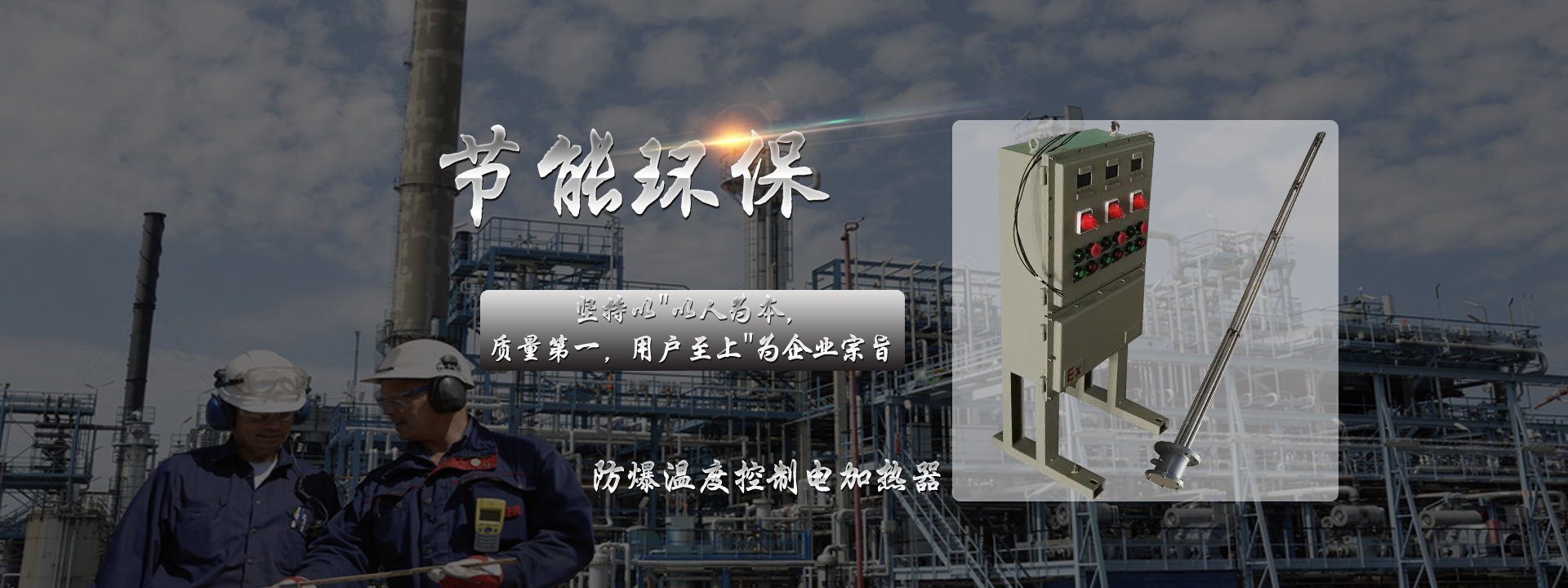
The foreign academic name for circulating electric heater is "circulation heater". The term "circulation" means that the heated medium is heated through forced convection, i.e., one end of the circulating electric heater uses a pump to inject fluid into the heating chamber, and after heating, it flows out from the other end of the electric heater, forming a circulation to achieve the goal. This circulation method can be pump-forced convection circulation or natural circulation. The circulating electric heater consists of electric heating elements, a container, a junction box, control elements, etc.
The application range of circulating electric heaters is wide, but the technical conditions such as the use environment and medium process parameters vary. This requires a comprehensive design of the heater to reduce manufacturing costs, ensure use effectiveness, extend service life, and meet process requirements.
II. Applications of Circulating Electric Heaters:
Circulating electric heaters can be used for heat preservation, temperature raising, preheating, and process heating of various liquids and gases, with wide applications in commercial, industrial, and military fields.
According to the application scenarios of circulating electric heaters, they can be roughly divided into three types of heating forms:
1. Closed-loop circulation
Closed-loop circulation means that the heated medium flows through the heater under a certain pressure, undergoes the process, and then returns to form a closed loop. Closed-loop circulation can be further divided into direct heating and indirect heating based on the characteristics of the medium being heated.
1.1 Direct heating
As the name implies, direct heating is a method where the heater directly heats the medium. When using this method, the selection of power density is particularly important. If the power density is too high, such as for heavy oil, the medium may carbonize, affecting the heater's lifespan.
Typical applications: Some testing equipment that requires relatively uniform medium temperature and laboratory applications requiring similar conditions.
1.2 Indirect heating
Indirect heating means that the heater first heats a medium, such as thermal oil, ethylene glycol solution, water, steam, etc., and then these media exchange heat with the heated body through coils in a container or reactor.
Typical applications include:
① Various fluids and temperature-sensitive fluids such as hot melt adhesive, asphalt, chocolate, etc.
② Media that are directly corrosive to electric heating tubes, such as acids and chemical solvents.
③ Mold heating for injection molding machines and extrusion machines, and other flat plate heating.
2. Sidewall heating
Sidewall heating involves the medium in a storage tank flowing through a heater attached to its side and then returning to the container. It heats through natural convection. If higher temperature uniformity or closer control temperature is required, adding a pump between the tank and the heater for forced convection is ideal.
Compared with direct heating, sidewall heating has the following advantages:
① Easy cleaning of the container
② Convenient maintenance of the heater without needing to drain the medium from the container.
Typical applications: Anti-freezing of water tank cooling towers, maintaining appropriate temperature and viscosity of lubricating oil.
3. Open-loop heating
Open-loop heating means that the heated medium is heated only once by the heater and then directly released to the application site.
Typical application: Preheating of fuel oil.