
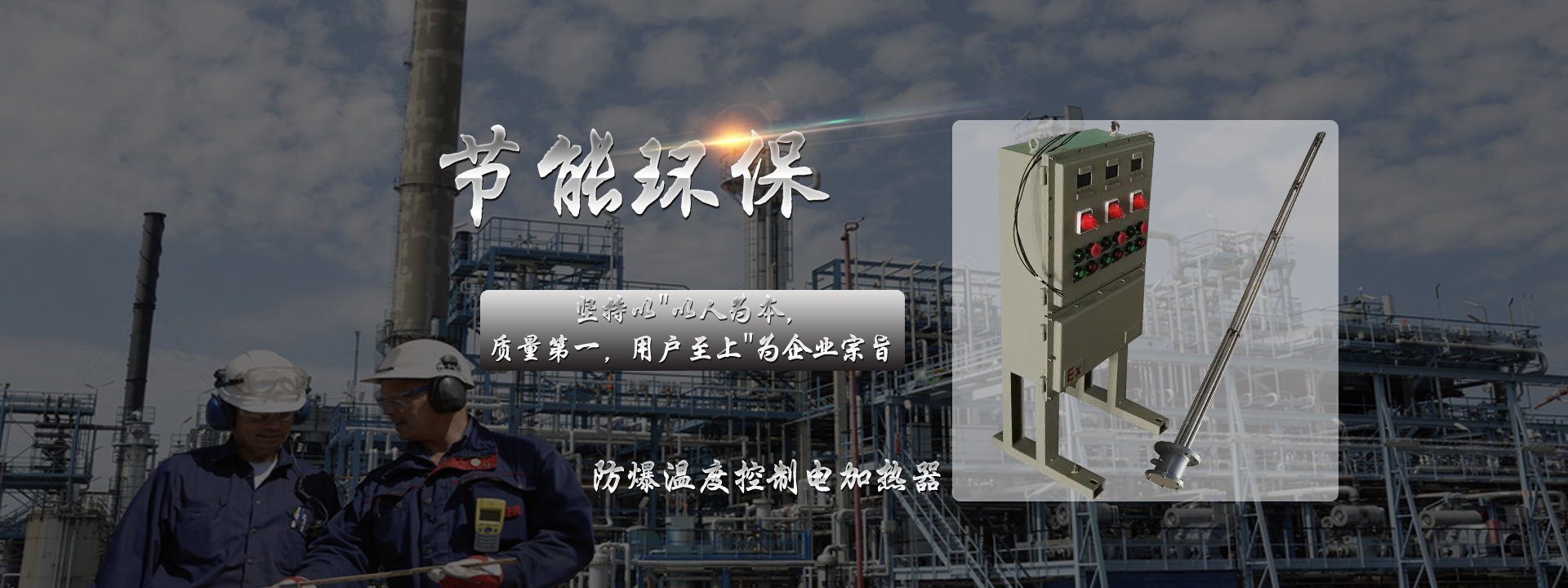
Heating element: Usually made of resistance wire or resistance strip, serving as the core component for heat generation.
Metal sheath: The heating element is encapsulated in a high-temperature resistant, corrosion-resistant metal tube, commonly made of materials such as stainless steel, copper, nickel alloy, etc.
Insulation material: Insulating material, such as magnesium oxide powder, is filled between the heating element and the metal sheath to prevent current leakage.
Connectors: Including leads, junction boxes, and other components for connecting to the power supply.
Working Principle
The working principle of the sheathed electric heater is to heat the surrounding medium through the resistive heat effect generated when current passes through the heating element. When current flows through the heating element, the resistance wire or strip generates heat, which is conducted through the metal sheath to the medium being heated.
Main Features
High efficiency and energy saving: Fast heating speed, high thermal efficiency, can reach the required temperature in a short time.
High temperature resistance: Made of high-temperature resistant materials, capable of operating at high temperatures.
Corrosion resistance: The choice of sheath material provides good corrosion resistance, suitable for various media.
Safe and reliable: Equipped with multiple safety protection measures, such as overheat protection, dry-burn protection, etc.
Flexible installation: Can be selected in various shapes such as straight, bent, U-shaped, etc., according to different application needs.
Application Fields
Sheathed electric heaters are widely used in multiple industries:
Petroleum and chemical: Used for heating oil products, chemical reagents, etc.
Food processing: Used for heating liquids in food processing, such as milk, juice, etc.
Pharmaceutical industry: Used for heating in drug synthesis, extraction, and other processes.
Water treatment: Used for heating liquids in wastewater treatment processes to promote chemical reactions.
Usage Precautions
Choose appropriate power and size: Select the appropriate power and size according to heating requirements to ensure heating effect.
Secure installation: Ensure the heater is firmly installed to avoid damage due to vibration.
Regular maintenance: Regularly check the insulation performance and connection parts of the heater to ensure it is in good condition.
Safe operation: Follow operating procedures, avoid dry burning or overheating, and prevent safety accidents.
Conclusion
Sheathed electric heaters are widely used in industrial heating due to their high efficiency, durability, and safety. With the development of technology, new materials and designs are constantly emerging, further improving the performance and reliability of sheathed electric heaters. If you have specific application needs or want to learn more about sheathed electric heaters, please feel free to ask.