
Which heating tube is better for instant electric water heaters?


<div class="wgt-best " id="best-answer-1472794040" style="background-image: initial; background-position: 0px 0px; background-size: initial; background-repeat: initial; background-attachment: initial; background-origin: initial; background-clip: initial; font-family: " pingfang="" sc",="" "lantinghei="" "microsoft="" yahei",="" arial,="" 宋体,="" sans-serif,="" tahoma;="" padding:="" 0px="" 28px;="" zoom:="" 1;="" color:="" rgb(51,="" 51,="" 51);="" font-size:="" 14px;"="">
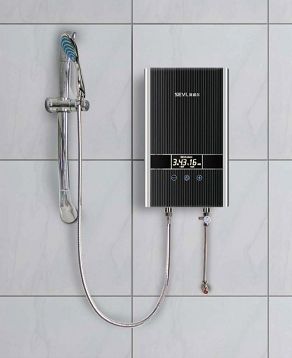


Comparison of heating technologies for instant water heaters;

Currently, there are three main heating technologies in the instant water heater industry: metal heating technology (divided into stainless steel and copper), crystal (quartz) heating technology, and nickel-gold heating technology.


First, the metal heating technology. The principle is to place a spiral heating tube in a heating chamber made of stainless steel or copper, similar to the "immersion heater" commonly used for boiling water. Market experience shows that this heating technology has obvious disadvantages: it is prone to scale buildup and corrosion, leading to water leakage and electric shock hazards, poor safety, and short lifespan.


Second, the crystal (quartz) heating technology. The principle is to coat a carbon film on the outer wall of a quartz tube (glass). The carbon film heats up and transfers heat through the quartz tube to the water inside. As you can imagine, quartz (glass) has poor thermal conductivity, so a large amount of heat is lost during transfer, resulting in low heating efficiency. Moreover, the carbon film on the outer wall gradually degrades over time, causing the heating efficiency to decrease. Additionally, glass has low stability and can pose safety issues under extreme temperature changes.


Third, the nickel-gold heating technology. This technology originated in Germany and is fully called "nickel-gold bare wire heating technology." The heater is made of nickel alloy with a nickel content of up to 80%, which is five times that of ordinary heating elements, commonly known as Ni80. Its thermal efficiency is far higher than traditional heating methods, with faster heat transfer and superior heating performance. Scale is the main factor affecting heater lifespan; scale formation requires temperatures above 63°C. The excellent thermal conductivity of the nickel-gold heater outperforms other materials, keeping local temperature differences below 63°C and completely preventing scale formation. Therefore, heat transfer is faster, and long-term use does not degrade heating performance or quality. Additionally, due to its strong corrosion resistance, the nickel-gold heater works normally in any water quality, greatly extending the water heater's service life.