
Introduction:
Electric heating tube, also known as heating tube or heating pipe, scientifically named tubular electric heating element, is made by placing coiled heating wire (resistance wire) inside a metal tube,
[Electric Heating Tube] Electric Heating Tube
and filling the surrounding gaps with insulating powder (MgO) that has good heat resistance, thermal conductivity, and insulation properties. Both ends of the heating wire have lead-out rods or wires. It features simple structure, high mechanical strength, high thermal efficiency, safety and reliability, easy installation, and long service life. It is widely used in various devices such as saltpeter tanks, water tanks, oil tanks, acid-alkali tanks, molten metal furnaces, air heating furnaces, drying ovens, drying boxes, and hot press molds.
Electric heating tubes are electrical components specifically designed to convert electrical energy into heat. Due to their low cost, ease of use, convenient installation, and no pollution, they are widely used in various heating applications.
Classification:
1. By lead-out method: single-head and double-head electric heating tubes.
2. By material: stainless steel, quartz, Teflon, titanium electric heating tubes.
3. By shape: straight, U-shaped, L-shaped, W-shaped, finned, and custom-shaped electric heating tubes.
4. By application: dry-burning and water-burning electric heating tubes.
5. By heating method: conventional resistance heating tubes and radiant electric heating tubes.
Materials:
Common outer tube materials: In800, In840, 304, 316L, 310S, aluminum, copper, low-carbon steel, etc.
Magnesium oxide powder is selected according to different usage requirements, including high-temperature and medium-temperature grades.
Resistance wire as heating element: generally two types, Ni-Cr wire and Fe-Cr-Al.
Lead terminal materials: generally two types, stainless steel and free-cutting iron.
Sealing materials: epoxy, silicone, glass, etc.
Tubular electric heating element (referred to as electric heating tube) is an electrical component specifically designed to convert electrical energy into heat. It uses a metal tube as the outer shell (including stainless steel and copper tubes), with spiral electric heating alloy wires (nickel-chromium, iron-chromium-aluminum) uniformly distributed along the axial center inside the tube. The gaps are filled and compacted with magnesium oxide sand having good insulation and thermal conductivity. Both ends of the tube are sealed with silicone gel. This metal-sheathed electric heating element can heat air, metal molds, and various liquids. Common electric heating tubes include finned tubes, Teflon tubes, quartz tubes, etc. Due to their low cost, ease of use, convenient installation, and no pollution, they are widely used in various heating applications.
Features:
Small size, high power: The heater primarily uses clustered tubular electric heating elements. Fast thermal response, high temperature control accuracy, and high overall thermal efficiency. High heating temperature: The maximum design temperature of the heater can reach 850°C. Uniform outlet temperature and high temperature control accuracy. Wide application range and strong adaptability: The heater can be used in explosion-proof or ordinary places, with explosion-proof grades up to dⅡB and C, and pressure resistance up to 20MPa. Long life and high reliability: The heater uses special electric heating materials, with low surface power load design and multiple protections, greatly enhancing safety and lifespan. Fully automatic control: According to requirements, through the heater circuit design, parameters such as outlet temperature, flow, and pressure can be automatically controlled, and it can be networked with computers. Significant energy-saving effect: Almost 100% of the electrical energy is converted into heat and transferred to the heating medium.
Common Types:
Finned Electric Heating Tube
A finned electric heating tube consumes electrical energy and converts it into heat to heat the material. During operation, the low-temperature fluid medium enters the input port under pressure through the pipeline, flows along the specific heat exchange channel inside the electric heating container, and follows the path designed based on fluid thermodynamics principles, taking away the high-temperature thermal energy generated by the electric heating element during operation, thereby raising the temperature of the heated medium. The outlet of the finned electric heating tube delivers the high-temperature medium meeting process requirements. The finned tubular electric heating element has metal散热 fins wound on the surface of the ordinary element, expanding the heat dissipation area by 2 to 3 times compared to ordinary elements. That is, the allowable surface power load of the finned element is 3 to 4 times that of ordinary elements. Due to the shortened length of the element, its own heat loss is reduced. Under the same power conditions, it has advantages such as fast heating, high thermal efficiency, long service life, small heating device volume, and low cost. It can be installed in air ducts or other static or flowing air heating applications.
Flange Electric Heating Tube
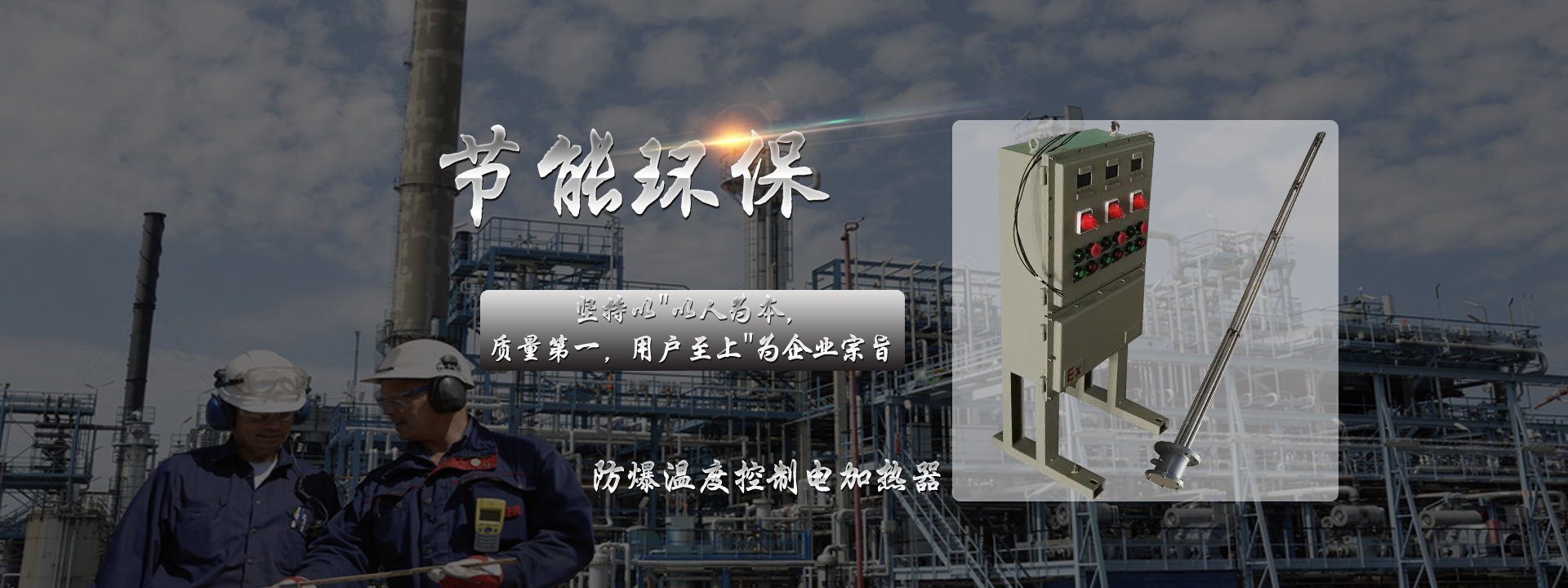
Flange electric heating tube (also called immersion electric heater): It uses U-shaped tubular electric heating elements, designed according to the specifications for different heating media, assembled on a flange cover according to power configuration requirements, and inserted into the material to be heated. The large amount of heat generated by the heating element during operation is conducted to the heated medium, raising its temperature to meet the required process conditions. When the medium temperature reaches the set value required by the process, the control system adjusts the output power of the electric heater based on the temperature sensor signal after PID calculation, achieving temperature control of the resistive load of the heating element. This ensures uniform medium temperature and meets requirements. When the heating element overheats or the liquid level is low, the interlock protection device immediately cuts off the heating power to prevent damage to the heating element and extend its service life. Flange electric heating tubes are mainly used for heat preservation and heating of materials in various storage tanks, containers, and oil tanks in industries such as petroleum, chemical, food, and machinery. The connection method can be flange type or threaded end face sealing.
Features of Ordinary Tubular Electric Heater:
1. This electric heater consists of a heating core and a protective tube. The HRY1 type sheathed electric heater uses a tubular electric heating element as the heat source, and the protective tube is made of thin stainless steel, which has a large heat dissipation area and fast heat transfer. The terminal part is divided into ordinary type (using iron拉伸 cup-shaped cover) and special type (using bolted explosion-proof device cover sealing). The special type meets the requirements of explosion-proof mark dIICT4 and protection level IP65 series standards. 2. The electric heater is connected to the oil tank container body via a flange. The protective tube isolates the heating core from the heated oil. When repairing the electric heater, there is no need to drain the oil from the tank; simply extract the heating core and replace it with a new one, making maintenance convenient. 3. During design, the contact area between the protective tube and the hot oil should be considered to prevent local carbonization of the oil due to excessive heating temperature.