
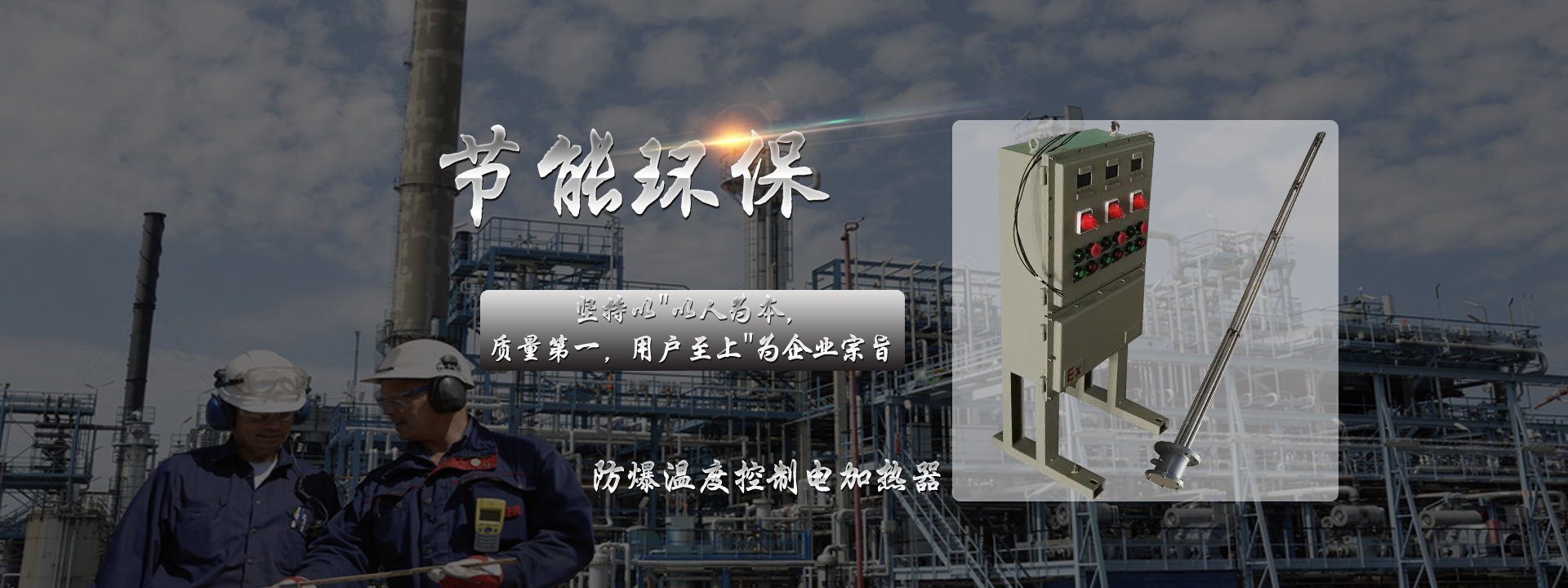
If the reactor electric heater leaks, what are the causes? Today, we will analyze the reasons in detail. For the electric reactor heater, this can also serve as a reference. The following is a detailed analysis:
Leakage of the reactor electric heater mainly manifests in two aspects: one is leakage at the tube port, and the other is leakage of the tube itself.
1.Tube Port Leakage
Cause 1: Excessive Thermal Stress
During the start-up and shutdown of the reactor electric heater, if the temperature rise rate and temperature drop rate exceed the specified range, the thermal stress on the tubes and plates will increase, causing damage to the weld or expansion joint, thereby leading to port leakage.
Cause 2: Tube Sheet Deformation
If the tube sheet deforms, leakage may occur when it connects with the tube. Insufficient tube sheet thickness is one of the causes of tube sheet deformation.
Cause 3: Improper Tube Plugging Process
Generally, conical plugs are welded to block the tube. When driving in the conical plug, the force should be moderate; excessive force can deform the tube hole. During the welding process, improper operation or incorrect position/size can also damage the connection between the tube and the tube sheet.
2.Tube Itself Leakage
Cause 1: Erosion by Scouring
When the steam flow velocity is relatively high and the steam flow contains large-diameter water droplets, the outer wall of the tube is scoured by the two-phase flow of steam and water, causing the tube wall to thin, perforate, or rupture under water pressure.
Due to the unreasonable material and fixing method of the anti-impingement plate, it may break or fall off after being impacted by steam or condensate, thus losing its protective function. The insufficient area of the anti-impingement plate and the too small distance between the shell and the tube bundle are also reasons.
Cause 2: Tube Vibration
When the tube bundle vibrates, if the vibration frequency or its multiple coincides with the frequency of the exciting force, resonance can occur, increasing the amplitude and ultimately damaging the connection between the tube and the tube sheet.
Cause 3: Corrosion
When the tube material of the reactor electric heater is copper, if the pH value is too high, it can cause corrosion of the copper tube, leading to leakage.
Cause 4: Poor Material and Process
This includes poor tube material, uneven tube wall thickness, defects in the tube, and over-expansion at the expansion joint, all of which are manifestations of poor material and process. Once the reactor electric heater encounters abnormal conditions, it is easy for the tube to be damaged, causing leakage.