
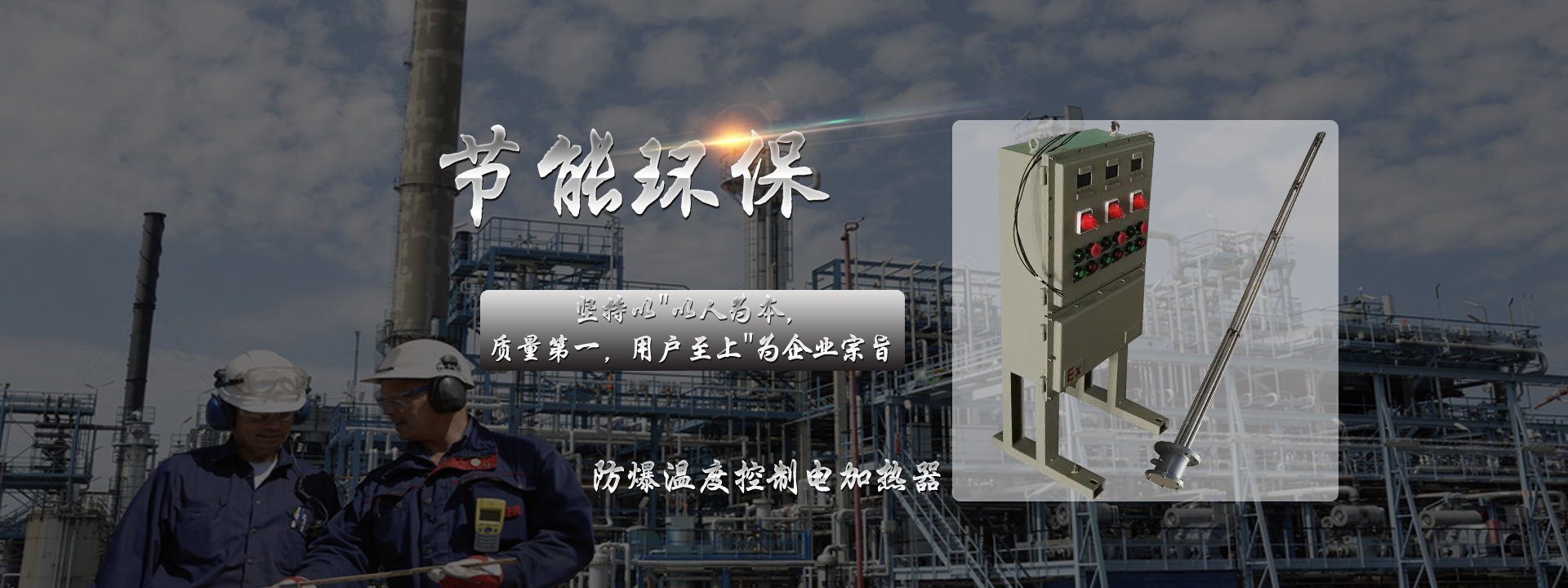
I. Overview of Flange Electric Heating Tubes
Flange electric heating tubes (also known as insertion electric heaters) are assembled by using U-shaped tubular electric heating elements, designed according to the specifications for heating different media, and mounted on the flange cover based on power configuration requirements. They are inserted into the material to be heated. The large amount of heat generated by the heating elements during operation is conducted to the heated medium, raising its temperature to meet the required process conditions. When the medium temperature reaches the set value required by the process, the control system adjusts the output power of the electric heater through PID calculation based on the temperature sensor signal, thereby controlling the temperature of the resistive load of the heating elements. This ensures uniform medium temperature and meets the requirements. When the heating element overheats or the liquid level is low, the interlock protection device immediately cuts off the heating power supply to prevent the heating element from burning out, thus extending its service life.
The flanges of flange-type electric heating tubes are generally divided into threaded flanges and flat flanges. The common sizes of threaded flanges are 1 inch, 1.2 inches, 1.5 inches, and 2 inches. Threaded flange tubes are usually suitable for low-power heating, with power ratings ranging from several kilowatts to over ten kilowatts. Flat flanges are available in sizes from DN10 to DN1200, and different powers are designed according to customer requirements. Generally, high-power flange-type electric heating tubes use flat flanges, with power ranging from several kilowatts to hundreds of kilowatts. Common voltages: 200V-220V-380V. Power ratings vary based on heating dimensions: 3KW-4.5KW-6KW-8KW-9KW-10KW-12KW-15KW-18KW-21KW, etc. They are usually composed of 3, 6, or 9 U-shaped double-endedheating tubes welded to the flange by TIG argon arc welding.
II. Classification of Flange-Type Electric Heating Tubes
1. Finned electric heating tubes for ovens
2. Electric heating tubes for sauna baths
3. Electric heating tubes for rice cooker water tanks
4. Tubular electric heating elements for electric boilers with fastener installation
5. Tubular electric heating elements for electric boilers with flange installation
6. Air electric heating tubes
7. Liquid electric heating tubes
8. Boiler electric heating tubes, etc.
III. Working Principle of Flange-Type Electric Heating Tubes
When current passes through the high-temperature resistance wire, the heat generated diffuses through the crystalline magnesium oxide powder to the surface of the metal tube, and then is transferred to the heated object or air to achieve heating. It is a component that converts electrical energy into thermal energy. It heats various flowing or stationary liquids or gases through forced or natural convection.
IV. Application Range of Flange-Type Electric Heating Tubes
Flange electric heating tubes,electric heating tubes can be widely used for heating water, oil, air, nitrate salt solutions, acid solutions, alkali solutions, and low-melting-point metals (aluminum, zinc, tin, Babbit alloy).
1. Duct heaters: Flange electric heating tubes are mainly used in the air supply ducts of air heating systems to blow hot air. They can also be used as heating elements for various ovens and electric furnaces.
2. Heating of nitrate salt solutions, oil, and water: Formed by welding bent tubular electric heating elements onto a flange. Flange electric heating tubes are used for heating in open or closed solution tanks and circulation systems.
3. Salt bath heating: Flange electric heating tubes are used for heating salt baths.