
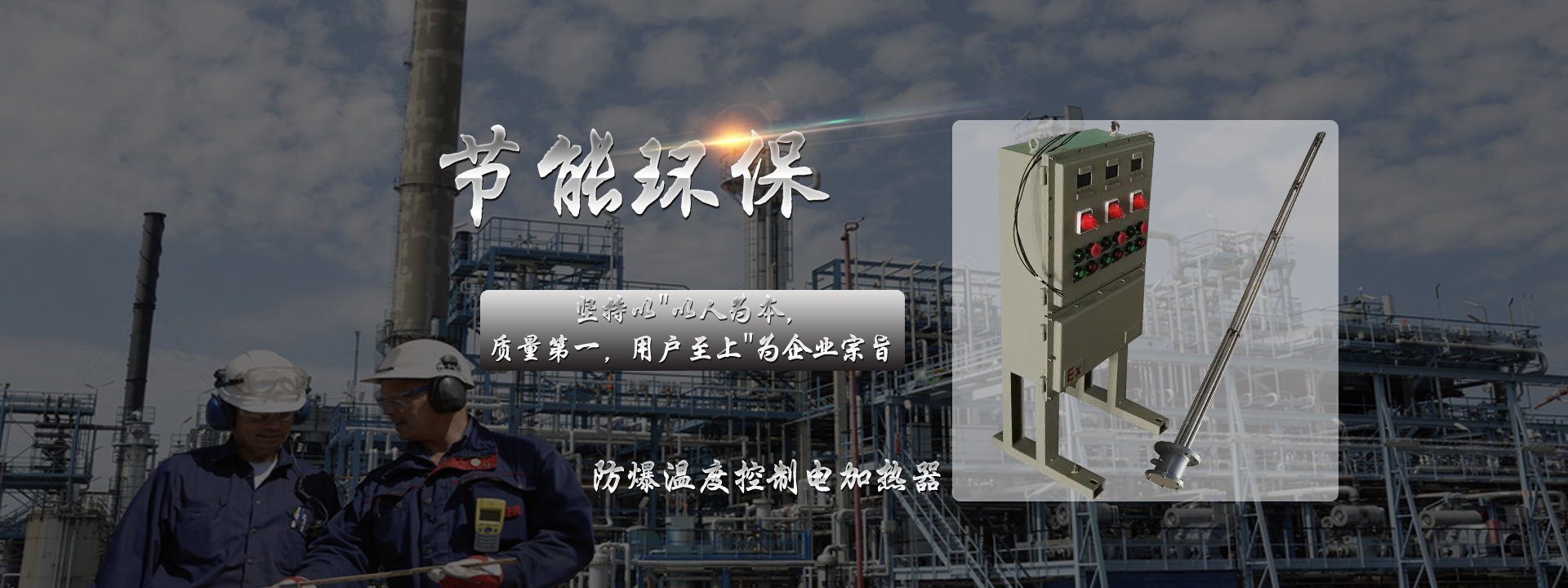
The duct electric heater consists of a main body and a control system. The heating element uses stainless steel tube as protective casing, high-temperature resistance alloy wire, and crystalline magnesium oxide powder, formed by compression process. The control part adopts advanced digital circuit, integrated circuit trigger, high reverse voltage thyristor, etc., to form an adjustable temperature measurement and constant temperature system, ensuring the normal operation of the electric heater.
Through the air supply system, the gas entering the duct electric heater forms high-temperature, high-pressure gas and is discharged. The generated hot air is dry, moisture-free, static-free, non-conductive, non-combustible, non-explosive, non-electrochemically corrosive, pollution-free, safe and reliable. It is widely used in aerospace, weapon industry, chemical industry, power station air conveying chute fluidization air heating, electrostatic precipitator ash hopper fluidization air and ash silo fluidization air heating, etc.
High-temperature resistance wires are evenly distributed inside the high-temperature resistant stainless steel seamless tube, and the gaps are densely filled with crystalline magnesium oxide powder with good thermal conductivity and insulation performance. This structure is not only advanced and has high thermal efficiency, but also provides uniform heating. When current passes through the high-temperature resistance wire, the generated heat diffuses through the crystalline magnesium oxide powder to the metal tube surface, and then transfers to the heated part or air to achieve the purpose of heating.
Duct electric heaters are used in industrial air ducts, air conditioning ducts, and various industries to heat the air, increasing the output air temperature. They are generally inserted transversely into the duct opening. According to the duct working temperature, they are divided into low temperature, medium temperature, and high temperature; according to the air velocity in the duct, they are divided into low wind speed, medium wind speed, and high wind speed.